Week 8 Reflection
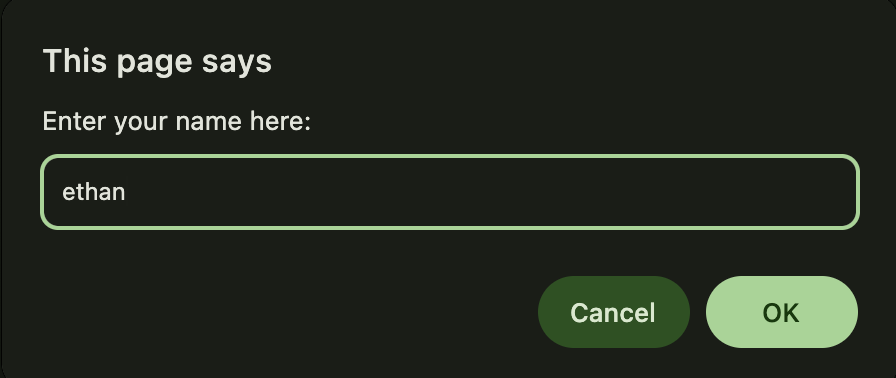

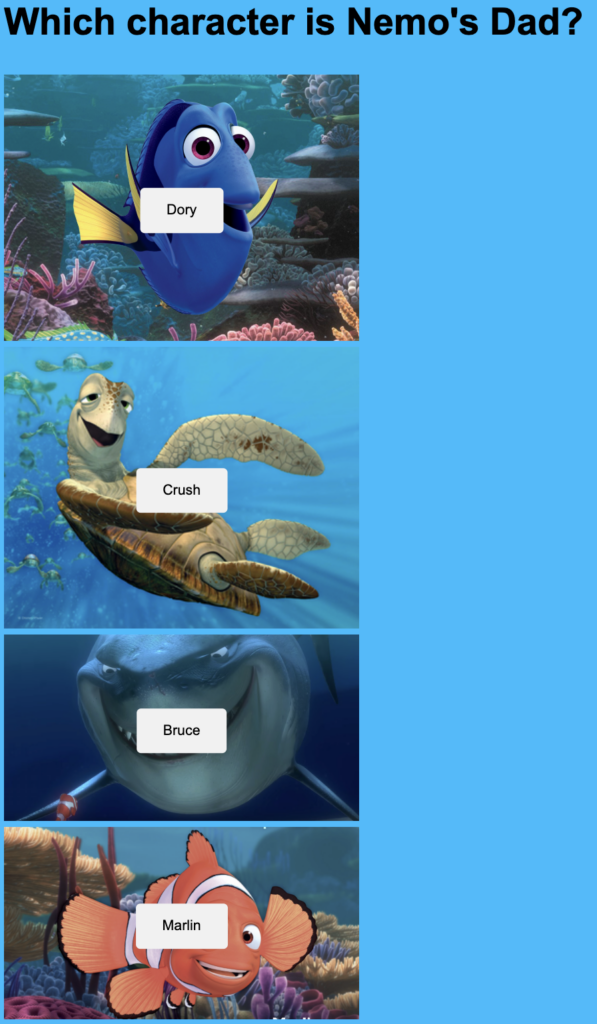


This week I did not get as far along in my Vibe coding as I felt was crucial enough to share; however, I did want to share my HTML and JavaScript game that I made for a coding class in university. I know the skills are different, but the idea of creating a game in code is the same! Unfortunately, despite me renewing my UVic website for years! (yes actual years) Uvic took it down as soon as I graduated. Quite frustrating, but I have included screenshots to show what it did above (as it only works on my local computer until I find a way to upload it to a site to run it again). The page would open, prompt you to put in a name, then take that name and welcome you.
The main part of the game included a multiple choice question where each answer would be right or wrong, giving you a pop up. I know its not the most interactive thing, but it was a lot harder to code on my own, but I am still impressed withmyself and wanted to share 🙂
I spent some more time thinking about coding, computational thinking, and gaming in relation to teaching Physical and Health Education. At first, it might seem like these topics do not connect very strongly with PHE, but the more I thought about it, the more I realized there are some potential overlaps.
Computational thinking is really about problem solving, breaking things into smaller steps, and adjusting when something does not work. In many ways, that is very similar to how students learn physical skills. When someone is learning a new movement, like juggling or shooting a basketball, they often need to break the skill into smaller parts and practice them step by step. As a teacher, I think this kind of thinking could help students reflect on how they improve a skill over time rather than just focusing on the final outcome.
Gaming is a bit more complicated in the context of PHE. On one hand, video games can take students away from physical activity if they spend too much time on screens. On the other hand, some games and digital tools can motivate people and introduce elements like progress tracking, challenges, or friendly competition. Those kinds of ideas could be used in PHE classes to help students stay engaged and track their improvement in a fun way.
I think the key is finding a balance where technology supports learning and motivation without replacing the physical movement that is at the center of PHE.
Questions to think about:
How could elements from games, like levels or progress tracking, help motivate students in physical education?
Do you think technology helps or distracts from learning physical skills?